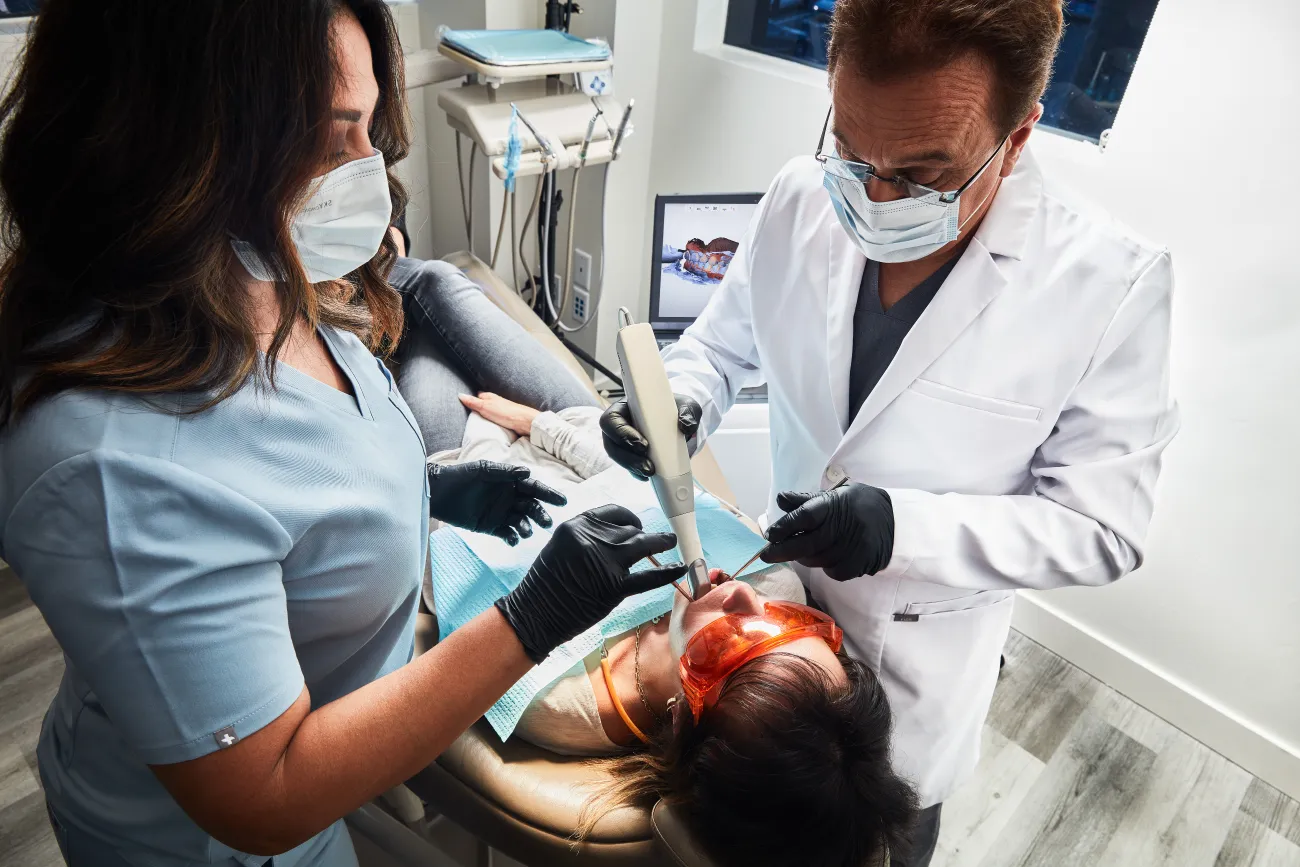
A stable, well-aligned bite is essential for comfortable chewing, healthy jaw joints, and long-lasting teeth. When the bite becomes unbalanced — from worn teeth, shifting teeth, past dental work, or jaw irregularities — it can lead to tooth fractures, muscle fatigue, sensitivity, and chronic TMJ discomfort. Our bite and occlusal rehabilitation treatments restore harmony between the teeth, muscles, and joints, giving you long-term stability and improved function.
What Is Bite / Occlusal Rehabilitation?
Bite rehabilitation is a specialized treatment that restores the proper relationship between your upper and lower teeth. The goal is to create a balanced bite where forces are evenly distributed, teeth meet in harmony, and the jaw joints function naturally and without strain.
When the occlusion (bite) is out of balance, the following problems often occur:
- Uneven tooth wear
- Chipped or fractured teeth
- TMJ pain or popping
- Headaches or facial tension
- Gum recession
- Tooth sensitivity
- Bite collapse
- Difficulty chewing
Bite rehabilitation identifies the underlying issue and rebuilds the bite to a healthier, more stable alignment.
Signs You May Need Bite Rehabilitation
You may benefit from occlusal rehabilitation if you experience:
- Frequent chipping or breaking of teeth
- Flattened or worn-down teeth
- Jaw soreness or tightness
- Headaches, especially in the morning
- Bite that feels “off” or unstable
- Difficulty chewing comfortably
- History of grinding or clenching
- Shifting teeth or old dental work failing
- Even small bite imbalances can lead to big long-term problems if left untreated.
Treatment Options for Bite & Occlusal Rehabilitation
Bite rehabilitation is fully customized and may include one or several restorative procedures depending on the severity of the imbalance:
✔ Occlusal Guards / Night Guards: Protect teeth from clenching and grinding while stabilizing the bite. Learn more: Occlusal Guards / Night Guards
✔ Dental Crowns: Rebuild worn, short, or damaged teeth to restore original height and alignment. Learn more: Dental Crown
✔ Onlays & Inlays: Conservative restorations that rebuild lost structure without covering the entire tooth. Learn more: Onlay & Inlays
✔ Porcelain Veneers: Restore the appearance and length of worn front teeth for improved bite and esthetics. Learn more: Porcelain Veneers
✔ Orthodontics or Clear Aligners: Correct misalignment when tooth position contributes to bite imbalance. Learn more: Orthodontics
✔ Full Mouth Reconstruction: In complex cases, rebuilding multiple teeth ensures correct bite height, stability, and long-term function. Learn more: Full Mouth Reconstruction
✔ TMJ Stabilization Therapy: When needed, muscle and joint evaluation helps guide proper bite design. Learn more: TMJ Treatment Page
Every treatment plan begins with an in-depth prosthodontic evaluation, including bite analysis, digital imaging, and assessment of tooth wear patterns.
Why See a Prosthodontist for Bite Rehabilitation?
Correcting a bite is one of the most technically demanding areas of dentistry. A prosthodontist has advanced specialty training in:
- Occlusion & bite mechanics
- Tooth structure & restorative engineering
- Jaw joint function (TMJ)
- Full-mouth reconstruction
- Material selection & smile design
- Complex bite rebuilding
As a Harvard- & USC-trained, board-certified Prosthodontist, Dr. Arman Torbati brings unmatched expertise to diagnosing and correcting bite problems. His training uniquely qualifies him to restore tooth height, rebalance bite forces, and design long-term, stable occlusal relationships.
- Patients often seek prosthodontic treatment when:
- Their bite “never felt right” after previous dental work
- They have ongoing TMJ issues
- They experience repeated tooth fractures
- They have severe wear or bite collapse
- Other dentists recommend full-mouth rehabilitation
They want a precise, predictable outcome
Your bite affects every aspect of oral function — restoring it correctly requires advanced specialty skill.
Bite and occlusal rehabilitation restores the harmony between your teeth, jaw joints, and muscles, helping prevent long-term damage while improving comfort and function. With a carefully designed and precisely executed treatment plan, you can achieve a more stable bite, stronger teeth, and enhanced overall oral health.
Bite & Occlusal Rehabilitation: Frequently Asked Questions
What causes an imbalanced or unstable bite?
Common causes include tooth wear from grinding or clenching, bite collapse, shifting teeth, orthodontic relapse, uneven or failing dental work, trauma, or developmental jaw differences.
How do I know if I need bite rehabilitation?
Signs include frequent tooth chipping or fractures, flattened or short teeth, jaw tension or headaches, difficulty chewing, sensitivity, or a bite that feels “off” or unstable.
What treatments are used to rebuild the bite?
Depending on your case: occlusal guards, crowns, onlays/inlays, porcelain veneers, orthodontics or clear aligners, and in complex cases, full mouth reconstruction and TMJ stabilization therapy.
Will bite rehabilitation improve TMJ symptoms?
Often yes. A properly balanced occlusion reduces strain on jaw joints and chewing muscles, which can lessen jaw pain, headaches, and related TMJ discomfort.
Can restoring my bite change facial appearance?
In severe wear or bite collapse, restoring proper tooth length and vertical dimension can improve lower-face support and overall facial balance.
How long does treatment take?
Simple cases may be completed in several visits; comprehensive rehabilitation can take several months depending on the number of teeth involved and treatment sequence.
Let’s Make Things Happen
Call today to schedule your dental consultation and explore the treatment options.
After years of feeling insecure about my smile, Dr. Torbati introduced me to the All on 6 dental implants. The results are nothing short of life-changing! My teeth look natural, and the comfort level is incredible. I can’t thank Dr. Torbati and his Los Angeles team enough for restoring my confidence.