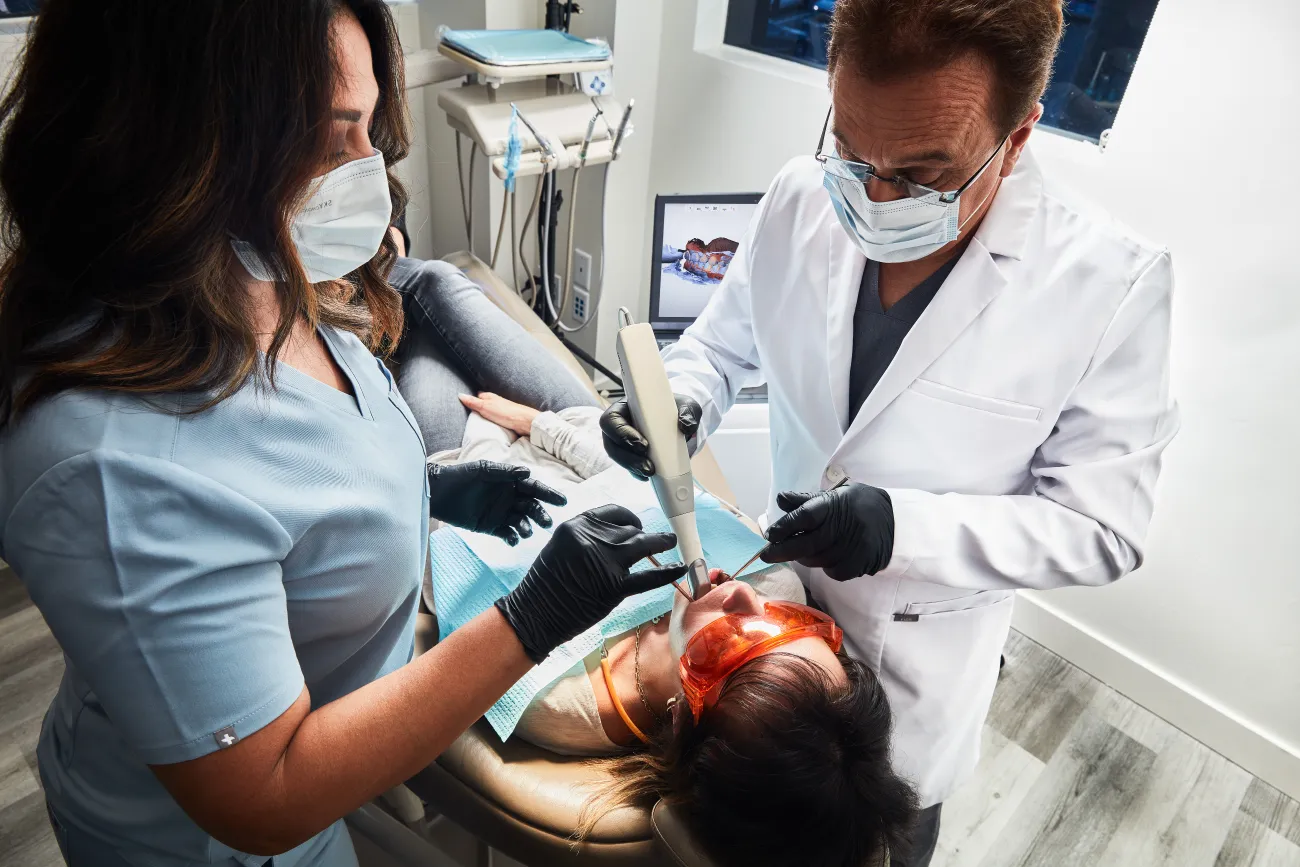
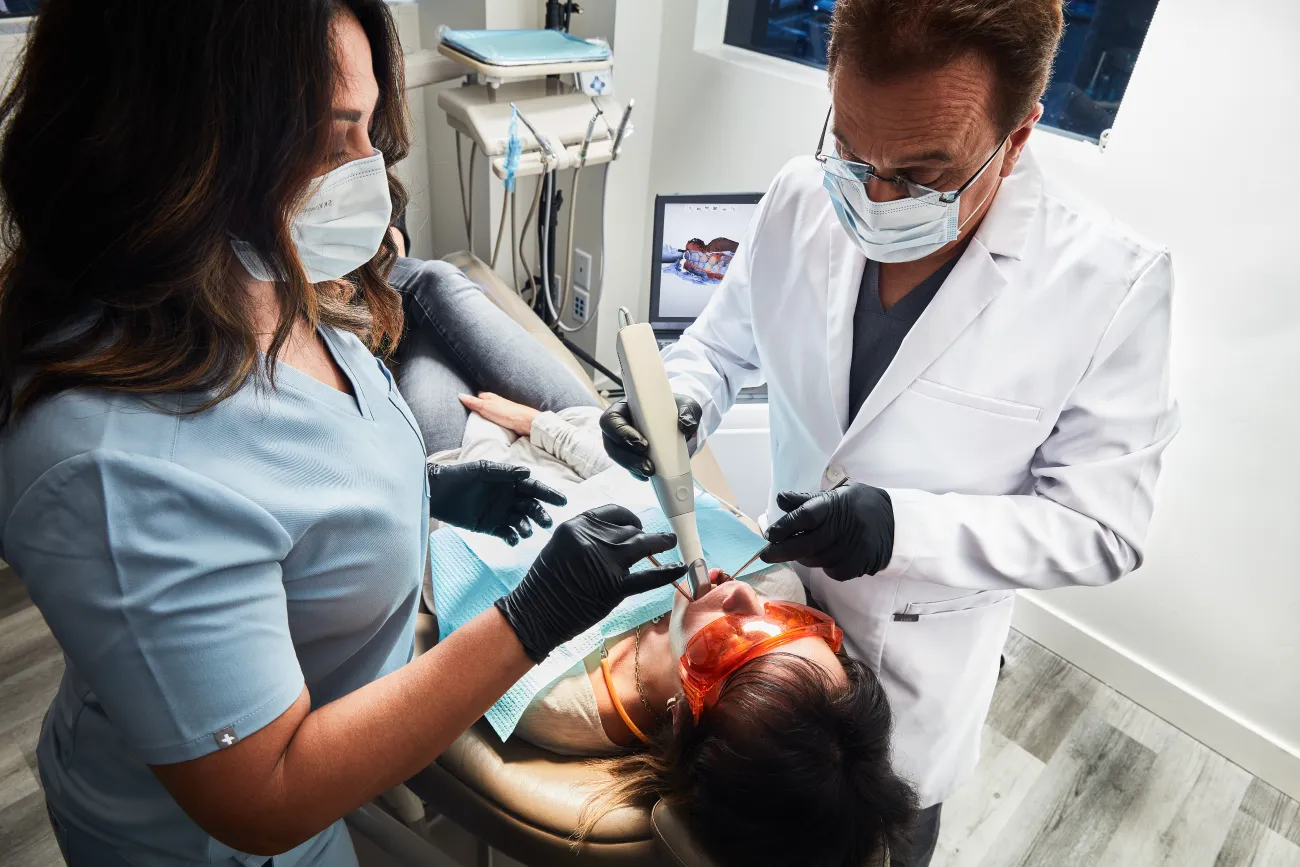
Dental work can fail for many reasons—materials wear out, the bite shifts, gums recede, or the original treatment didn’t address the underlying mechanics of your smile. Our Restoration of Failing Dental Work service focuses on diagnosing why a crown, veneer, bridge, denture, or implant restoration is failing, then rebuilding it with long-term function, comfort, and esthetics. As a prosthodontic practice serving Los Angeles and Beverly Hills, we correct isolated issues and complex, multi-tooth cases using advanced planning, premium materials, and bite engineering.
What Counts as “Failing” Dental Work?
Dental work may be failing if you notice:
- A crown or veneer that is loose, fractured, or keeps debonding
- A bridge that traps food or irritates the gums
- An implant crown that feels high, spins, or chips
- A bite that feels “off” after dental work
- Recurrent decay around margins, dark lines, or sensitivity
- Frequent chipping/wear of recent restorations
- Gum recession exposing margins or causing esthetic mismatch
These problems are often symptoms of deeper issues—occlusion (bite), material choice, prep design, cementation technique, or inadequate planning.
Why Dental Work Fails (Common Causes)
- Bite imbalance (occlusal interference): uneven forces chip ceramics and loosen restorations
- Material mismatch: using the wrong ceramic for bite load or location
- Margin design & fit issues: open margins → leakage, staining, recurrent decay
- Inadequate tooth reduction or over-reduction: weak structure or pulpal sensitivity
- Improper bonding/cementation protocol
- Implant biomechanics: poor angulation, wrong framework design, or cantilevers
- Parafunction (clenching/grinding): accelerates cracks, chips, and loosening
- Aging dentistry: normal wear of older materials and cements
Our Approach: Diagnose First, Then Rebuild
Correcting failing dental work requires finding the root cause, not just replacing what broke. We use:
- Comprehensive Prosthodontic Exam: tooth structure, restorations, gums, muscles, TMJ
- Digital Imaging & Photography: document fractures, wear patterns, and esthetics
- Bite Analysis: identify interferences and load pathways that damage restorations
- Material Planning: select ceramics and metals for location, load, and translucency
- Phased Treatment Plans: address urgent failures first, then stabilize the system
Why Choose a Prosthodontist for Failing Dental Work?
Replacing a broken crown or veneer without correcting the bite forces, preparation design, or material selection often leads to the same failure again. Prosthodontists receive advanced training in complex reconstruction, occlusion, implant biomechanics, material science, and esthetic integration.
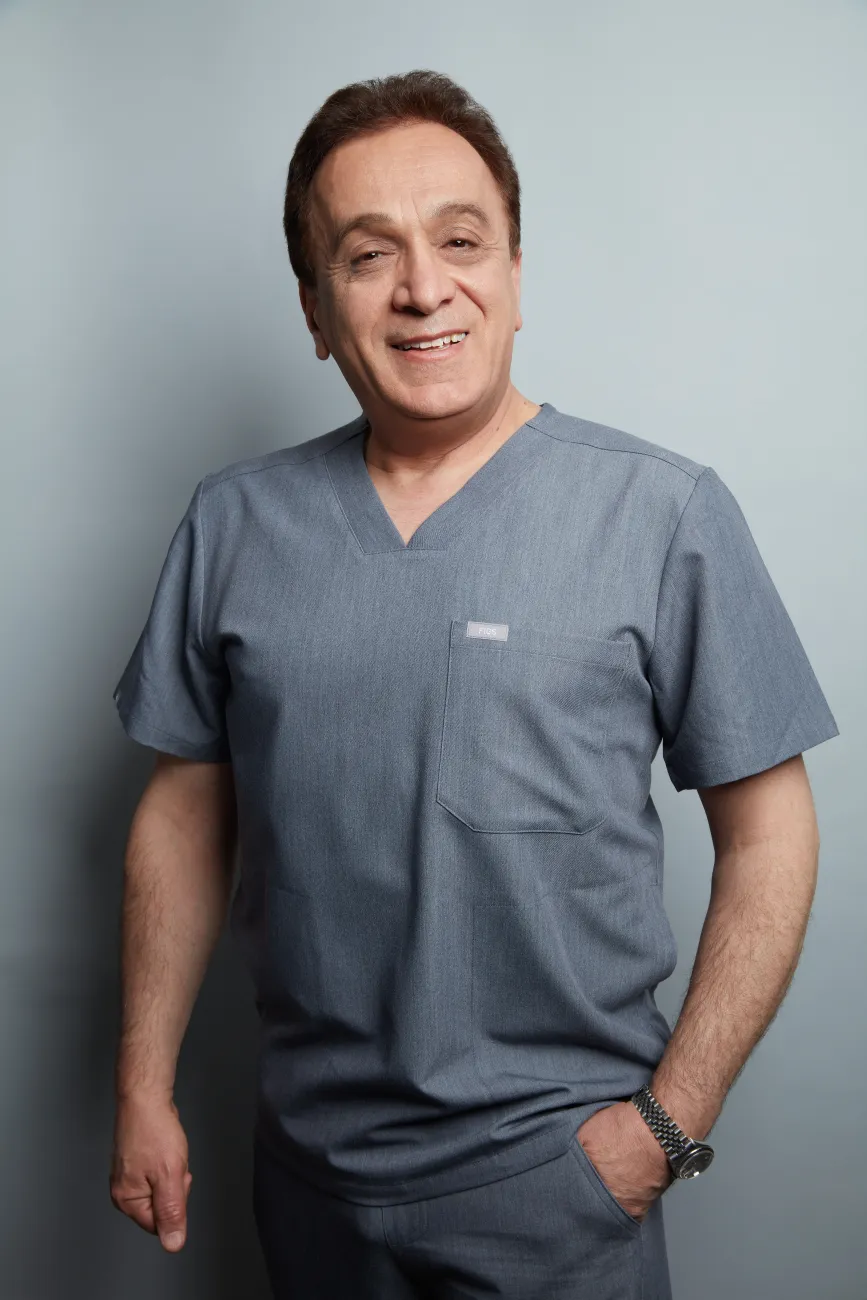
Dr. Arman Torbati (Harvard & USC-trained, Board-Certified Prosthodontist; 25+ years) applies specialty protocols to:
- Rebuild restorations that resist chipping and debonding
- Balance the bite to protect teeth, joints, and ceramics
- Choose ceramics that match load, location, and translucency needs
- Correct emergence profiles and margins for healthier gums
- Create esthetics that blend naturally with your face and smile line
This approach delivers durable, natural-looking results that are comfortable day-to-day and stable long-term.
Treatment Options We Provide
Replacement Crowns (Zirconia, e.max, layered ceramics): stronger, better-fitting restorations with refined margins and color.
➜ See Dental Crowns Page
Veneer Redesign / Replacement: esthetics + proper bonding and bite guidance.
➜ See Dental Veneers Page
Implant Restoration Repair/Replacement: screw-retained conversions, framework redesign, porcelain repairs, and occlusal adjustment.
➜ See Implant-Supported Restorations Page
Bridge Replacement (tooth- or implant-supported): eliminate food traps, improve hygiene access, and restore proper emergence profile.
➜ See Implant-Supported Bridges Page
Onlays & Inlays: conservative alternatives where full crowns aren’t required.
➜ See Inlays & Onlays Page
Bite / Occlusal Rehabilitation: re-establish stable contacts and vertical dimension to stop repetitive failure.
➜ See Bite Rehabilitation Page
Night Guards / Occlusal Guards: protect new work from clenching and grinding.
➜ See Occlusal Guards / Night Guards Page
Full Mouth Reconstruction: coordinated rebuild for multiple failing restorations.
➜ See Full Mouth Reconstruction Page
Restoring failing dental work isn’t just a replacement—it’s a redesign of how the tooth (or implant) functions within your bite and smile. With prosthodontic diagnosis, advanced materials, and precise occlusion, failed crowns, veneers, bridges, and implant restorations can be rebuilt for comfort, longevity, and natural esthetics.
Frequently Asked Questions About Failing Dental Work
What is considered failing dental work?
Failing dental work includes loose crowns, chipped veneers, irritated gums around restorations, implant crowns that feel unstable, bite discomfort, recurring decay around margins, or restorations that repeatedly break or debond.
Why does dental work fail?
Common causes include bite imbalance, clenching/grinding, poor margin design, incorrect material choice, aging restorations, improper bonding or cementation, gum recession, and underlying tooth decay.
Can failing dental work be repaired, or must it be replaced?
Many restorations can be repaired, but severe fractures, poor margins, or structural instability often require replacement. A prosthodontic evaluation determines the best option for long-term success.
How do you diagnose why a restoration failed?
We use high-resolution imaging, bite analysis, digital photography, and prosthodontic evaluation to identify issues with occlusion, tooth structure, materials, and biomechanics.
Why should I see a prosthodontist for failing dental work?
Prosthodontists specialize in complex restorative problems, bite mechanics, ceramic materials, and implant prosthetics. This ensures restorations are rebuilt for long-term durability, fit, and natural esthetics.
Can poorly done dental work affect my bite or jaw?
Yes. Improperly shaped or placed restorations can alter bite contacts, leading to jaw tension, headaches, tooth wear, or TMJ discomfort.
How long will the restored dental work last?
With proper planning, bite calibration, and material selection, restorations can last many years. Longevity depends on oral habits, maintenance, and biomechanical stability.
Let’s Make Things Happen
Call today to schedule your dental consultation and explore the treatment options.
After years of feeling insecure about my smile, Dr. Torbati introduced me to the All on 6 dental implants. The results are nothing short of life-changing! My teeth look natural, and the comfort level is incredible. I can’t thank Dr. Torbati and his Los Angeles team enough for restoring my confidence.